
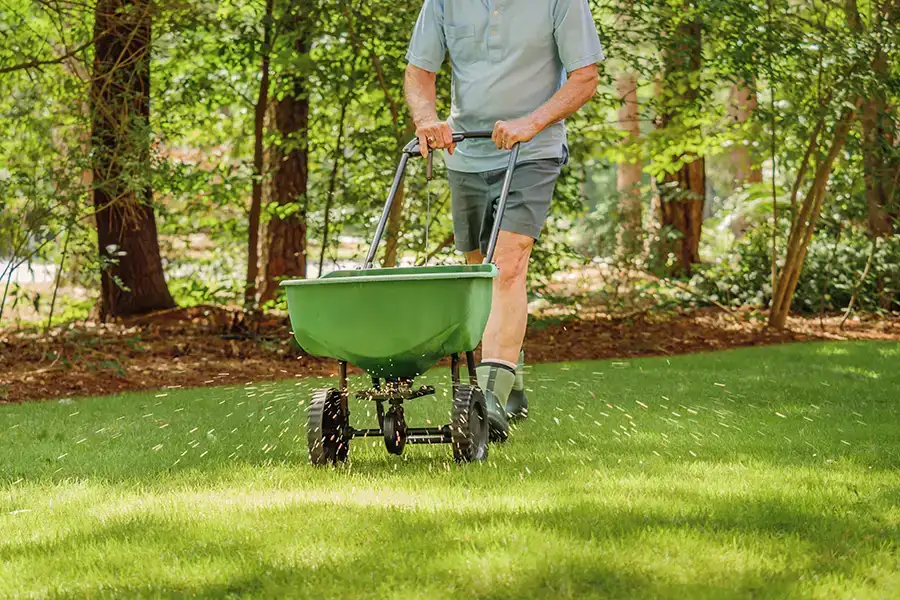
Key Takeaways – Overseeding and Fertilizer
- Avoid fertilizing and overseeding at the same time because standard fertilizer makes existing grass grow too fast, which shades out and smothers the new sprouts.
- Wait 6–8 weeks to fertilize; standard fertilizers cause existing grass to grow too fast, which shades out and smothers new sprouts.
- Use a Starter Fertilizer if you must fertilize while seeding; its high phosphorus levels prioritize root strength over suffocating top-growth.
- Always mow low and aerate before you spread seed to ensure it hits the dirt instead of getting trapped in the grass blades.
- Remember that Florida overseeding is usually for winter Rye grass, as permanent lawns like St. Augustine are grown from sod, not seed.
Fertilizing your lawn is a crucial step in nurturing its growth and resilience, but choosing to do so at the right time is important. Many people believe that the sooner you fertilize, the better – just put fertilizer down at the same time that you overseed and you’ll be setting your grass up for success over the long term.
But is this actually true? Does fertilization while overseeding turbo-charge your grass growth? In this article, we’re going to explore this topic in-depth by discussing:
- Should You Use Fertilizer When You Overseed?
- The Starter Fertilizer Exception
- What’s the Correct Order of Steps When Planting Grass?
- How Long Should You Wait After Overseeding to Apply Fertilizer?
Listen Now on Overseeding and Fertilizer Techniques
[podcast inserted into post]
This audio covers all you need to know!
Should You Use Fertilizer When You Plant Grass?
Generally, you should avoid doing this – except for one exception, which we’ll note momentarily.
Many people assume that new grass seeds need fertilizer immediately in order to germinate and grow quickly. However, it’s generally best to fertilize separately from overseeding. Applying fertilizer and new grass seeds at the same time can lead to problems such as:
- Competition for sunlight: This is the most significant threat. Fertilizer triggers rapid “top-growth” in existing grass, creating a canopy that shades out and smothers tiny new sprouts.
- Competition for nutrients: Established grass has a more developed root system and will aggressively hog nutrients, leaving new seeds starved.
- Herbicide Interference (Pre-Emergents): Many standard fertilizers are “Weed and Feed” products containing pre-emergent herbicides. These chemicals are designed to create a barrier that stops seeds from sprouting. If applied while overseeding, they will treat your new grass seed as a weed and prevent it from ever germinating.
- Seed disturbance: Spreading granules or applying liquid solutions can physically disturb the soil surface and displace the newly planted seeds. This hinders their ability to establish and grow.
- Incorrect nutrients: Seeds require a “root-first” nutrient balance (Phosphorus), while established grass thrives on “blade-first” nutrients (Nitrogen). Applying a general-purpose fertilizer may not provide the ideal balance of nutrients for the newly planted seeds.
What About “Starter Fertilizer”? Is Starter Fertilizer and Overseeding at the Same Time Safe?
This is the exception. If you’re a homeowner who can’t wait 6-8 weeks, you may consider applying starter fertilizer during the overseeding process.
Unlike standard lawn food, starter fertilizers are formulated with higher phosphorus to encourage strong roots without causing the existing grass to grow so fast that it suffocates the new seeds.
Ready for your INSTANT quote?
Click the button below to leave your information and we’ll be in touch with a free quote!
What Should You Know About Overseeding in Florida?
In many regions, homeowners overseed when they want to bolster thin grass. Here in Florida, overseeding usually means “winter overseeding,” where Rye grass seeds are spread in late October or November. This keeps your lawn green over the winter while your permanent warm-season grass is dormant.
Most permanent Florida grass types – for example, St. Augustine or Zoysia – are usually grown from sod or plugs, not seed.
When Should You Apply Fertilizer When Planting Grass from Seed?
grass seeds and young grass in a florida lawn after overseedingIn most cases, applying fertilizer is one of the last steps when you plant new grass. Unless you’re using a starter fertilizer, it’s important to give the new grass a little bit of time to grow and take root.
Caring for your lawn involves several crucial steps, and the order in which you perform them matters. To ensure the healthy growth of your grass and maximize your results, here’s what we recommend:
- Test Your Soil: This is a crucial step that often gets ignored. We strongly recommend doing a soil test – this will give you valuable information on which nutrients are missing, allowing you to choose the right fertilizer later.
- Mow Low: Cut your existing grass shorter than usual (about 1.5 to 2 inches). This ensures the new seeds can reach the dirt rather than getting caught in the grass blades.
- Aerate the Soil: Aeration creates channels in the ground, allowing air, water, and nutrients to penetrate deeply. This is a vital step for successful overseeding.
- Remove Thatch: Thatch removal ensures maximum seed-to-soil contact, which is the most important factor in whether a seed will actually grow.
- Overseed: Once the soil is prepared, introduce new grass seed to fill in bare spots and enhance overall density.
- Water the Grass Deeply: Provide consistent, deep watering to help the seeds germinate. Adequate moisture is crucial for the new grass to sprout and establish roots.
- Wait 6-8 Weeks: Give your new grass time to develop. Waiting ensures the young sprouts have a chance to take root before they are forced to compete with the rest of the lawn.
- Apply a Fertilizer Treatment: Once the grass is well-established, introduce a fertilizer treatment to provide the nutrients needed for long-term health and vigor.
How Long Should I Wait Between Overseeding and Fertilizing?
The optimal timing for fertilizing your lawn after overseeding is typically between six to eight weeks. Waiting until the newly sprouted grass is well-established minimizes the risk of harming the new growth. Additionally, it ensures that the young sprouts can efficiently absorb the nutrients from your fertilizer treatment, resulting in a healthier and more resilient lawn in the long run.
Note: Do not apply any fertilizer containing weed-control chemicals (herbicides) for at least 8 weeks after seeding. These products cannot distinguish between seeds from common Florida weeds and a new grass seed. They will kill your new growth before it can even start.
Professional Lawn Overseeding Services
Overseeding your lawn can be a complex task, involving processes like thatch removal and establishing a proper watering routine. To ensure your new grass takes root and thrives, consider getting professional lawn care.
At Heron Home & Outdoor, our specialized lawn care techniques go beyond the basics, incorporating advanced methods such as core aeration. By strategically aerating the soil, we create pathways for essential elements to reach the soil, allowing your grass to absorb nutrients more efficiently.
We also utilize slow-release fertilizers tailored to the specific needs of Florida lawns, ensuring a steady supply of nutrients over time. Whether you have newly seeded areas or an existing lawn, our lawn fertilization experts will design a program for you to support grass growth and promote a dense, healthy turf.
Ready to get started with top-notch lawn care in Florida? Call the experienced team at Heron Home & Outdoor! We offer a comprehensive range of lawn care services to elevate your landscape to the next level.