
Florida Lawn Care – Our Ultimate Guide to Lavishly Lush Grass
Key Takeaways
- There are right ways and wrong ways to mow and water your grass. For a healthy and beautiful lawn, it’s crucial to learn how to do both.
- Weeds, lawn pests, and fungi are all enemies of your lawn. Make sure to monitor closely for signs of them.
- Fertilization and aeration are also keys to taking your lawn to the next level.
- Your lawn has different needs at different times of the year. Adjust your approach depending on the season.
- Determine which type of grass you have. Different grass species require different levels of care.
Top 10 Florida Lawn Care Tips
 Florida’s warm and humid climate makes it challenging to grow a lush, green, healthy lawn. So much so that, whether you’re new to lawn care or you’ve been doing it your whole life, there’s always more to learn.
The good news? The lawn of your dreams is within reach if you follow these Florida lawn care tips.
Let’s dive into our Top 10 Florida Lawn Care Tips:
Tip #1: Learn the Right Way to Water Your Lawn
Your lawn will suffer if it is not watered correctly. Underwatering can cause dry spots and browning, while overwatering can lead to rot, mold, and fungus growth.
To find the right amount of water for your lawn, pay close attention to wilt. When the blades fold in or you begin to notice long-lasting footprints, it’s time to increase the amount of water or frequency with which you water.
If your lawn develops a spongy texture or has excess runoff, you are likely overwatering and may want to cut back.
Also, when watering your lawn, keep these principles in mind:
- Water between the hours of 3-9 AM to avoid fungus, evaporation, and other issues
- Watering frequency will change depending on the season and weather conditions
- Always remember to adhere to local ordinances during water restrictions
Discovering exactly how much you should water your lawn will keep it happy and healthy. If you’re having a hard time finding the sweet spot, a lawn professional can help you calculate the perfect watering schedule for your grass.
Tip #2: Master Your Mowing Technique
These are the three main points to keep in mind when you mow your lawn:
- Blades: Dull lawnmower blades can lead to browning, while sharp ones will allow the grass to heal faster. Most lawnmower blades should be sharpened after every 20-25 hours of use, and you should always carefully follow the manufacturer’s instructions or request the help of a professional when sharpening the blades.
- Height: Cutting your grass too short will inhibit photosynthesis and could cause problems. Though each grass type has a different ideal height, try keeping it at least 2 ½” long.
- Frequency: Most healthy, fast-growing lawns should be mowed roughly once per week. However, it’s important to keep in mind that you should never cut more than ⅓ of the leaf surface. Using the growth rate can help you find the perfect frequency for your lawn.
For more information on proper lawnmowing technique, check out our article on how to how to mow your lawn keeps the grass looking tidy, uniform, and beautiful.
Tip #3: Stay Ahead of Weeds & Pests
If there’s one Florida lawn care tip that can apply to anywhere else, it’s control your weeds and pests. In addition to looking unsightly, infestations and weed growth will make your lawn more susceptible to disease.
Knowing how to identify the common weeds and pests in Florida can help you catch infestations early. Here are some main signs to look out for:
- Patches or strips of dying grass
- Dirt mounds or burrows
- Holes throughout the lawn
- Damaged blades of grass
If you notice any of these signs, contact a professional as soon as possible. Lawn infestations and weed outbreaks can be difficult to deal with on your own, and they can quickly take over your yard. An expert can help identify and treat the root cause of your problem so your grass can stay green and healthy.
Tip #4: Fertilize Your Lawn to Promote Growth
Fertilizing your lawn is a great way to supply your grass with the nutrients it needs to thrive. However, it can be a tricky process, from finding the right treatment to applying it properly. Though there are hundreds of fertilizer formulas to choose from, most fall into these three categories:
- Organic: Typically made using compost or manure, organic fertilizers are all natural and slowly break down into the soil over time.
- Granular: Granular fertilizer comes in small dry pellets of compounds such as potassium nitrate and ammonium sulfate. These are generally cheaper and will release nutrients over the course of 1-3 months.
- Water Soluble: Most water-soluble fertilizers are ammonium-based, so they will be absorbed quickly by your lawn. These are best applied early in the morning when there is dew on the grass.
When applying a fertilizer treatment, it’s important to use the right amount. Too little won’t yield results, while too much could cause fertilizer burn and kill your grass. Be sure to carefully follow the manufacturer’s recommendations, or work with a lawn care expert to find the perfect amount.
Timing and weather patterns play a factor, too. Fertilizing your lawn when the weather is hot could burn and kill off your grass. Meanwhile, applying a treatment too close to rain will just wash it away. Try choosing a cool day that is a few days after rain for best results.
Fertilizing can be a tricky process. If done improperly, it could have negative consequences like root burn or disease. To ensure great results, consider working with a lawn care service for professional fertilizer treatments.
Tip #5: Aerate Your Lawn
Lawn aeration is the process of poking small holes throughout the surface of your lawn. This is a great way to prevent soil compaction while also allowing oxygen and other nutrients to reach deep into the roots, which promotes stronger and healthier growth.
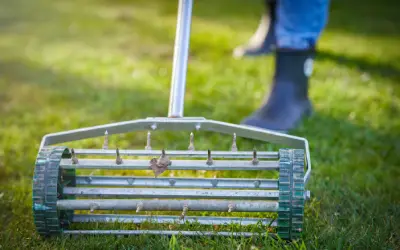 With the right tools, aeration can be a fast and easy process. Though each type of grass has different needs, it’s generally best to aerate in the spring or fall.
Tip #6: Get Your Lawn Ready for the Year Ahead During the Spring
Lawn care tips change as the seasons change, so it’s important to update your lawn care regimen to keep up. Knowing what steps to take during different times of the year will keep your lawn healthy even with added sunshine or rain.
Consider the arrival of the season as a call to action, a time to invest in the health and beauty of your lawns. Spring is the most important time of year for lawn care, and a lot of the work happens now. With the arrival of spring, the landscape transforms, signaling a time of renewal and growth.
Early spring care is pivotal in setting the tone for the vitality of your yard through the warmer months. Here’s what we recommend:
- Assess your lawn’s current condition: Kickstart your lawn’s recovery with a thorough inspection. Look for areas of compaction, thatch buildup, or any signs of disease and pest infestation. Addressing these issues early can prevent problems from escalating as the season progresses.
- Rake and remove yard debris: A clean slate is crucial for healthy growth, so it’s important to rake your lawn to remove leaves, sticks, and other debris that may have accumulated over the winter months. This not only tidies up your yard but also prevents mold and disease while ensuring sunlight and air can efficiently reach the grassroots.
- Aerate your lawn: This is the ideal time of year for aeration, especially if you plan to use fertilizer to stimulate growth.
- Fertilize as needed: Applying a balanced, slow-release fertilizer early in the season supports growth and greenness, but timing can be crucial to get the best out of this process. Be mindful of the type of grass you have, as cool-season and warm-season grasses have different nutrient needs.
- Early season weed control: Target common spring weeds by applying an herbicide when the soil temperature consistently reaches about 55 degrees Fahrenheit. Pre-emergent herbicides can save you a lot of trouble down the line by preventing weeds before they start.
- Don’t mow until the grass is growing: The first cut of the season is critical. Wait until your lawn reaches about 3 inches in height before you start cutting the grass in spring. This patience allows the grass to strengthen and ensures a healthy start. Also, be sure to sharpen your mower blades before your first cut of the year.
- Don’t mow too short: Another top tip is to adjust your cutting height. Initially, set your mower to the highest setting to avoid shocking the grass. Cutting the grass too short too soon can lead to a weaker lawn that’s more susceptible to weeds and diseases. As spring progresses, gradually lower the mower setting but never cut more than a third of the blade at once.
- Consistency is key: A regular mowing schedule encourages a thick, healthy lawn that can outcompete weeds. Adjust your mowing frequency based on growth rate, which is influenced by weather, watering, and fertilization. It’s also a good idea to leave the clippings on the lawn as they decompose, as they add valuable nutrients to the soil. However, avoid leaving large clumps of clippings, as they can smother the grass beneath.
Tip #7: Keep Your Lawn from Wilting or Dying in the Summer
As the sun blazes, you’ll need to take special care of your lawn to keep it from wilting or dying. Follow these summertime lawn care tips:
- Stay on top of your watering schedule
- Watch out for pest infestations
- Mow regularly with sharp blades
- DO NOT fertilize when it’s hot outside
It’s also important to remember that June 1st marks the start of hurricane season here in Florida. While you can’t totally prevent damage to your lawn during a serious storm, pruning nearby trees and storing your tools indoors can limit the risk of damage to your property.
Tip #8: Cut Back on Watering and Mowing in the Fall
Fall is when temperatures drop and grass growth slows down. Update your autumn lawn care regimen in these ways:
- Cut back on mowing and watering
- Regularly rake leaves and debris
- Aerate and apply topseed
Tip #9: Reduce Wear and Tear in the Winter
In most places in Florida, lawns do not go fully dormant in the winter. However, they will grow very slowly and won’t need as much – if any – mowing or watering.
The best way to care for your lawn during this time of year is to reduce foot traffic to prevent trampling or damage.
Tip #10: Learn the Most Common Types of Grass in Florida
Florida is a state with extreme conditions. On the one hand, you might think it would be perfect for growing a healthy lawn with all the sunshine and afternoon showers.
This is partially true, but on the other hand, the sun and storms can be so extreme that many species of grass do not thrive here. Long periods of sunshine can bake and dry out grass, even if it rained just the other day. On the flipside, continuous storms can flood your lawn.
If you hope to have a healthy, green lawn, you’ll want to check out the following types of grass which are suitable to the harsh Florida climate.
St. Augustine Grass
If you know the name of any type of grass, it’s probably this one, and for good reason. St. Augustine is one of the most widely-used varieties of grass in residential properties. It is known for its darker blue-green color and thick, broad blades. Homeowners across the south love this grass because of its high tolerance for heat, easy establishment, and adaptability to many kinds of soil. However, it’s thickness can make it difficult to mow and can also provide a habitat for destructive chinch bugs.
Bermuda Grass
Golf fans will surely have heard of Bermuda grass, as it is used on many popular Florida golf courses. It has thin, greyish green blades with deep digging roots which make the grass highly resistant to foot traffic and drought. But if you want it to stay healthy and green, it is best to water frequently. It can also invade areas where you don’t want the grass, like flower beds. You must also watch out for pests like mole crickets which can destroy the grass.
Zoysia Grass
This species of grass is often touted as the most beautiful type to use in a lawn with its rich, vibrant green color. But it too has its benefits and drawbacks. Its slower rate of growth means less time mowing, but it also means that it takes the grass much longer to recover from damage or diseases. In addition, its shallow roots require more frequent irrigation and care, and take longer to establish themselves in the soil. Professional lawn care is recommended for getting the most out of a Zoysia lawn.
Tip #10: Consider Getting Professional Lawn Care
If you want to keep your grass looking great all year long, it can be a lot of effort. That’s why these Florida lawn care tips are designed to help you work smarter, not harder. If you’re still having trouble, then professional lawn care services could be a great fit for you.
Here at Heron Home & Outdoor, we strive to provide you with exceptional service and outstanding results. Our knowledgeable, certified technicians have the equipment and expertise needed to keep your lawn looking lush and green all year long. From lawn pest control to regular maintenance, we offer custom treatments that will take your yard to the next level.