
How to Spot Drywood Termites Before They Damage Your Central Florida Home
Metro Orlando FL | Kissimmee - Sanford - Leesburg
 Drywood termites can be tough to catch early, but recognizing the signs (like swarming winged termites, tiny pellets, and blistered wood) can save your home from serious harm. Knowing what to watch for gives you the upper hand in stopping these silent destroyers before they dig in too deep.
With over 24 years of experience battling termite infestations across Orlando, we’ve seen firsthand how drywood termites can quietly compromise a home’s structure and your peace of mind.
What Exactly Are Drywood Termites?
Drywood termites are crafty little invaders that prefer living inside dry, untreated wood, right inside your home. Unlike subterranean termites that rely on soil and moisture, drywood termites get all the water they need straight from the wood they consume. That means they can thrive in places like roof beams, hardwood floors, and even furniture.
Their size varies by role: soldier termites protecting the colony grow to about three-eighths of an inch, while the reproductive termites that start new colonies are closer to half an inch long. Their color ranges from pale brown to darker or yellowish shades.
Drywood Termites vs. Subterranean Termites: What’s the Difference?
The biggest distinction between drywood and subterranean termites lies in where they live and how they survive. Subterranean termites must stay in contact with soil and require moist environments, constructing mud tubes to reach your home’s wood. Drywood termites don’t need soil at all, they nest entirely inside dry wood above ground.
Subterranean termites often invade from below, through cracks in your foundation, while drywood termites can fly in through attic vents or tiny gaps around windows. This means drywood termites can settle anywhere there’s dry wood, from your attic to your furniture.
They also differ in how they feed: drywood termites tunnel across the wood grain, carving smooth galleries that weaken both soft and hard wood layers, posing a serious structural threat.
Warning Signs of Drywood Termites in Your Home
- Spotting winged termites swarming near your house is a clear red flag. These are reproductive termites seeking new places to colonize, indicating an established infestation nearby.
- Many miss the small “kick-out” holes where these termites expel their droppings. These pellets resemble tiny grains of rice and often accumulate beneath infested wood.
- Wood that looks blistered or bubbled on the surface is a sign termites have tunneled close underneath. Sometimes tapping the wood will produce a hollow sound even when it looks intact. Stiff doorframes or windows that stick can also signal hidden termite damage.
Drywood termites work quietly inside wood, so visible damage often appears only after years of infestation. That’s why professional inspections are crucial to catch problems early.
 Why Are Drywood Termites So Hard to Eliminate?
Drywood termites are notoriously difficult to eradicate because they live deep within wood, often in hard-to-reach spots like inside walls or attic beams. Surface treatments alone won’t do the job.
Since they don’t need soil, drywood termite colonies can spread throughout your home’s wooden structures, creating multiple satellite colonies that make treatment more complex.
Ready for your INSTANT quote?
Click the button below to leave your information and we’ll be in touch with a free quote!
What’s the Most Effective Drywood Termite Treatment?
Treatment depends on how widespread the infestation is and where the termites are located.
For smaller, localized infestations (say in a doorframe or piece of furniture) we use precise methods like termiticide injections or expanding foams that reach deep into termite galleries.
In cases where the infestation covers a large part of the home, fumigation is often the best solution. Though it requires temporarily vacating your home, fumigation penetrates every nook and cranny, eliminating termites throughout the structure.
 Our Drywood Termite Inspection and Treatment Process
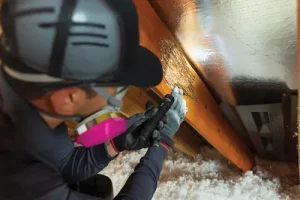
We start with a thorough inspection of your entire property, training our technicians to uncover every potential entry point and hiding spot, from obvious wooden beams to concealed places like behind picture frames.
Once we know the scope of your infestation, we develop a treatment plan tailored to your needs. This could mean spot treatments for smaller areas or tent fumigation for widespread infestations.
Our commitment doesn’t end with termite removal. We schedule follow-up visits to ensure the pests are gone and help you understand how to protect your home moving forward, sealing entry points and reducing conditions that attract termites.
Trust Heron Home And Outdoor to Shield Your Orlando Home From Termites
Choosing the right pest control partner can be overwhelming, especially when facing termite damage concerns. Homeowners in Orlando rely on us because we protect every corner of their homes from wood-destroying insects.
Don’t let drywood termites eat away your home’s value and your peace of mind. The sooner you take action, the less damage you’ll face, and the sooner you can relax knowing your home is safe. Reach out to us today for a professional termite inspection.