
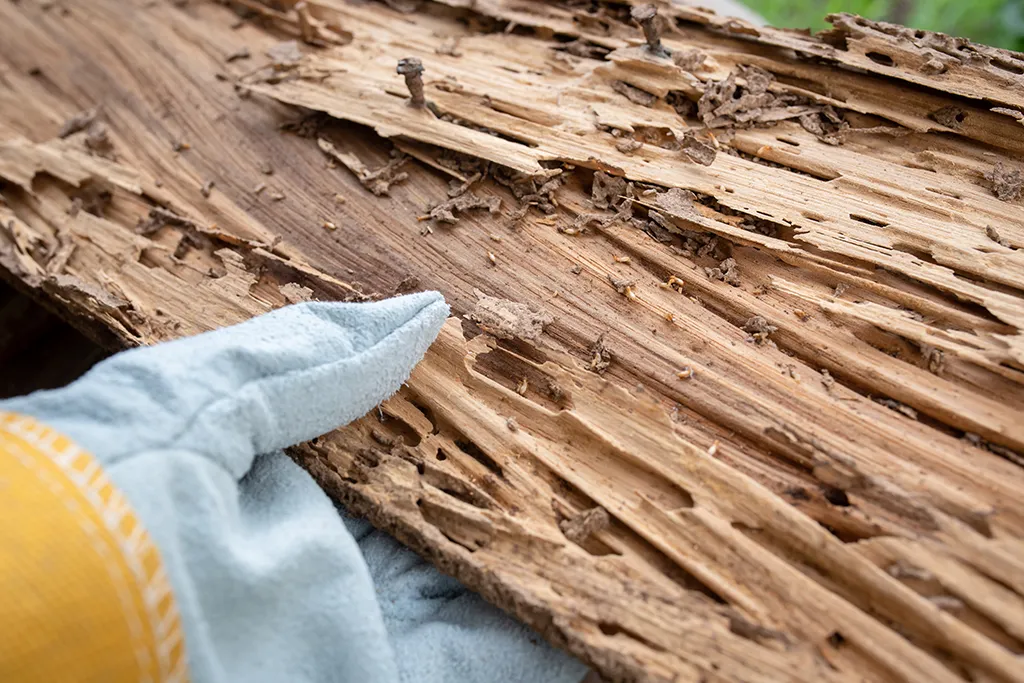
Termites are capable of doing more damage than you may think in your home and yard, and typically go after anything that contains cellulose.
Termites will eat through the very structure of your home, including support beams, flooring, posts, wall studs, and more. Termites also are capable of damaging plaster and the foam insulation inside your home. Outside, they can easily damage piles of lumber, fallen logs, wooden decks, outdoor furniture, and more. It is precisely the fact that these wood-boring insects feed on sources in or near your home that makes them so dangerous.
Why Do Termites Eat Wood?
The wood in your home contains a fibrous structural protein called cellulose. Most pests ignore it entirely, but termites have a gut tailor-made to break down the material into an invaluable food source. So they eat your wood, and they’ll continue eating for as long as they have a presence in your home. This puts not only the structure of your home at risk, but anything else that contains wood in your home as well.
What Structures do Termites Infest?
Termites are capable of infesting any wood source, especially if it has contact with the soil. Most homes are built primarily with wood, which is why termites find your property so appealing. Some of the things termites often infest include:
Inside the home:
- Floorboards, walls and ceilings
- Support beams
- Drywall
- Baseboards
- Slabs
- Tiling
- Windows
- Insulation
Outside the home:
- Roof tiles
- Wood piles and firewood
- Patio furniture
- Fallen lumber
- Logs and stumps
Ready for your INSTANT quote?
Click the button below to leave your information and we’ll be in touch with a free quote!
What Woods Do Termites Eat?
Termites are drawn to cellulose fibers rather than the wood itself. However, it’s been noted that they have a definite preference for the fibers in certain varieties of wood. Termites are more likely to be drawn to:
- Untreated softwood, like pine or cedar
- Untreated hardwood, like oak or maple
- Drywall, sheetrock, or plaster
- Particle board
- Plywood that hasn’t been pressure-treated
What Materials are Resistant to Termites?
Because termites are such a threat to anything wood, it’s smart to know which materials are resistant to termites when remodeling or building a new home.
Some of the things termites are not known to infest include:
- Treated lumber: This has chemicals in it that prevents rot and makes it undesirable to pests.
- Cement/concrete: Termites will not eat through these, as the material is too solid and lacks cellulose. They can make their way into a home through small cracks in concrete, however.
- Metal: Again, metal does not contain cellulose and is thus not suitable for termites.
- Redwood/cedar: These types of wood are somewhat naturally resistant to termites. However, once they start to decay, that can attract termites.
The Damaging Nature of Termites
Knowing what termites do and don’t eat is crucial to better understanding what the risk of infestation and potential damage could be inside and outside your home. The bottom line is that termites can do more damage than you may realize, and it’s important to take the risk that they pose seriously.